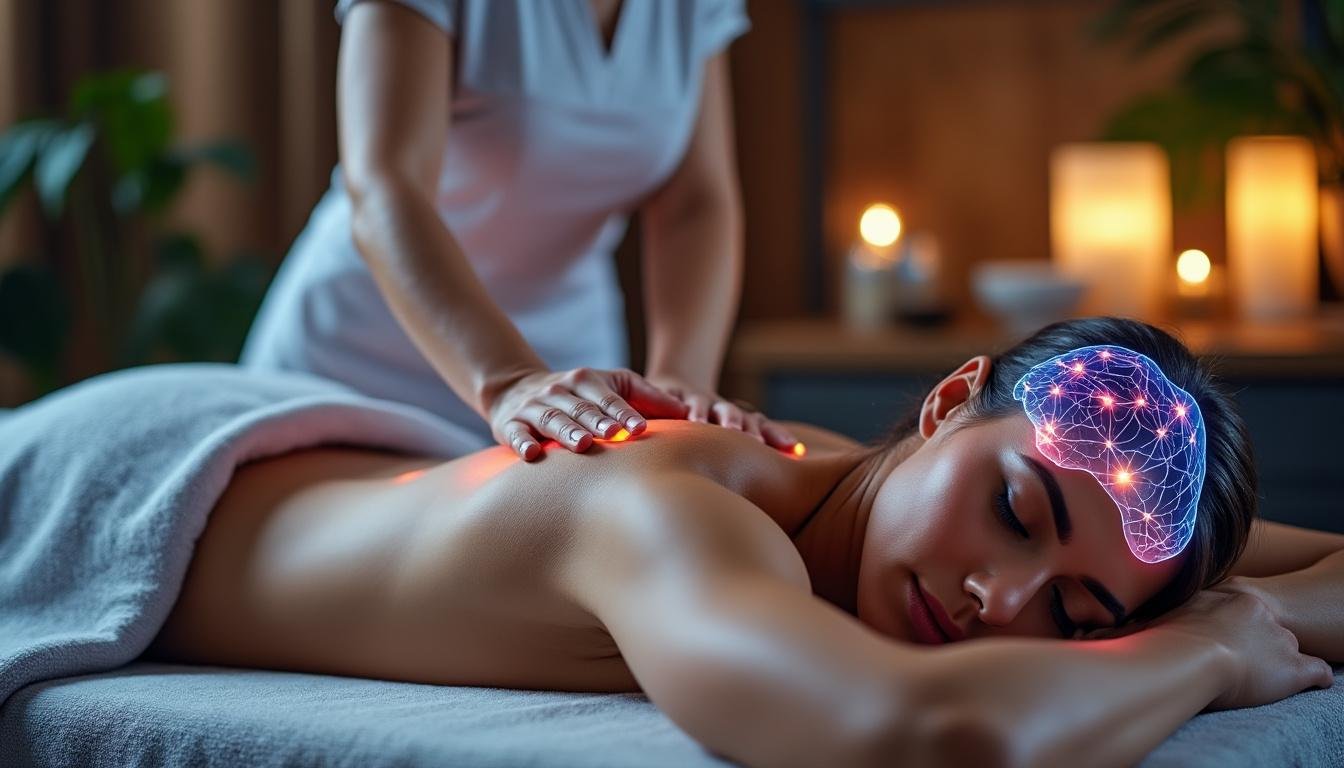

Exploring the science behind relaxation reveals how professional massage therapy significantly reshapes brain function, offering profound benefits beyond mere physical comfort. Through a combination of touch-induced neurochemical release, parasympathetic nervous system activation, and enhanced blood circulation, massages produce a cascade of effects that contribute to improved mental health and cognitive wellness. This immersive dialogue between body and brain explains why a skilled massage not only eases muscle tension but also recalibrates neural pathways associated with stress relief and emotional balance. In wellness practices across the Riviera Maya, understanding these mechanisms elevates the experience from simple leisure to therapeutic necessity.
Unlocking the relationship between massage and brain health involves appreciating neuroplasticity—the brain’s remarkable ability to adapt and reorganize itself. As studies in neuroscience demonstrate, the sensory input from a professional massage modifies autonomic nervous system responses, favoring states of relaxation and restoration. The resulting physiological shifts influence mood regulation circuits, diminish the prevalence of anxiety and depressive symptoms, and foster a calm mental state essential for holistic wellness. Becoming acquainted with this dynamic, guests receiving expert massages in Playa del Carmen and surrounding areas gain a deeper awareness of the transformative power behind every therapeutic touch.
Neurochemical Alchemy: How Massage Triggers Brain Chemicals for Stress Relief
The interaction that a professional massage initiates with the brain goes beyond the soothing sensation on the skin. Central to this interaction is the release of vital neurochemicals that orchestrate relaxation and emotional well-being. Oxytocin, often heralded as the “love hormone,” emerges in elevated quantities during massage therapy. This peptide hormone bolsters trust and social bonding, while simultaneously diminishing stress and anxiety levels. Its rise is instrumental in cultivating an immediate sense of calm, which clients often describe as a transcendent experience of comfort and safety.
Parallel to oxytocin’s action, massage therapy provokes a dip in cortisol, the hormone mainly responsible for the body’s stress response. Chronic cortisol elevation correlates with numerous health issues, including impaired cognitive function and increased anxiety. Through the rhythmical and precise application of pressure, professional massage dampens cortisol secretion, effectively resetting the brain’s stress-related circuitry. This biochemical shift not only promotes immediate relaxation but also supports long-term mental health by reducing the wear and tear that chronic stress exerts on the neural landscape.
Additionally, massage stimulates the production of endorphins, endogenous opioids responsible for natural pain relief and euphoria. These neurotransmitters suppress pain signals and enhance pleasure, leading to an uplifted mood and an improved sense of well-being. Clients often report feeling refreshed and emotionally balanced after a massage, outcomes strongly linked to heightened endorphin activity. The combined effects of oxytocin, lowered cortisol, and endorphins create a potent neurochemical cocktail that fundamentally rewires how the brain manages stress and fosters relaxation.
Furthermore, the tactile stimulation from massage activates particular sensory nerve fibers, such as C-tactile afferents, specialized in transmitting soothing touch sensations to brain regions responsible for emotional regulation. This direct neurological route bolsters feelings of safety and decreases emotional distress. Together, these chemical and neural mechanisms illuminate how professional massage acts as a natural regulator and enhancer of brain function. Discover more about how this is unfolding in luxury spa settings by exploring the latest insights on professional massage and relaxation.
Activating the Parasympathetic Nervous System: The Physiological Pathway of Relaxation
One of the critical ways a professional massage rewires the brain is through the modulation of the autonomic nervous system, especially by activating the parasympathetic nervous system (PNS). Unlike the sympathetic nervous system that prepares the body for fight-or-flight responses, the PNS instigates rest-and-digest states that encourage recovery, regeneration, and psychological calmness.
Scientific studies reveal that targeted massage techniques, such as vagus nerve stimulation through moderate pressure on the neck and head, directly enhance parasympathetic activity. This is often measured by increases in high-frequency heart rate variability (HF-HRV), an established biomarker indicating vagal tone. Improved vagal tone signals the brain that the body is in a safe environment, permitting a cascade of restorative processes, including reduced heart rate and blood pressure, enhanced immune response, and diminished inflammation.
More subtle massage forms, like gentle shoulder or back strokes, contribute as well by encouraging deep, slow breathing patterns, which further facilitates PNS activation. This respiratory modulation encourages pulmonary afferent nerves to relay signals that calm the brainstem’s autonomic centers. The resulting physiological harmony supports not only immediate stress relief but also ongoing brain function optimization, improving attention, emotional regulation, and cognitive performance.
The parasympathetic stimulation correlates with enhanced activity in brain areas linked to wellbeing, such as the insula and prefrontal cortex, underlining massage as a potent therapy for mental health maintenance. The combination of neurochemical release and parasympathetic modulation makes massage a unique intervention. For a practical guide on how to incorporate these therapies in your relaxation routine in Playa del Carmen, see this expert overview.
Neuroplasticity and Massage: Rewiring Stress Pathways for Long-Term Wellness
Beyond immediate relaxation, one of the most exciting aspects of professional massage is its impact on neuroplasticity—the brain’s capacity to rewire itself structurally and functionally. Repetitive relaxation sessions promote adaptive changes in neural networks, specifically those involved in managing stress and emotional regulation.
Massage therapy fosters a rebalancing between the limbic system, responsible for emotional processing, and the prefrontal cortex, which exerts executive control over stress responses. This enhanced connectivity reduces the tendency for chronic stress circuits to dominate, mitigating mental health disorders such as anxiety and depression.
Repeated engagement in professional massage therapy establishes a feedback loop wherein the relaxation response becomes increasingly accessible through neural remodeling. Individuals may find themselves naturally more resilient to stress triggers, experiencing improved mood stability and better cognitive clarity. Cases from spa professionals in the Riviera Maya illustrate this phenomenon, with clients reporting sustained reduction in anxiety after weeks of consistent massage treatments.
Moreover, massage-induced neuroplasticity helps attenuate the HPA (hypothalamic-pituitary-adrenal) axis hyperactivity, a core factor in stress-related illnesses. This regulation aligns with improvements in heart rate variability and hormonal balance, consolidating the mind-body wellness benefits of massage therapy. For more on the science behind these transformative effects, consult research on massage therapy and the brain.
The Social Brain and Touch: Enhancing Emotional Health Through Therapeutic Massage
Human touch represents a fundamental pillar of social connection, deeply entwined with brain mechanics that govern emotional health. During a professional massage, the brain’s mirror neuron system is activated, fostering empathy, understanding, and a feeling of safety. This sensory engagement taps into ancient ancestral wiring that promotes relaxation and healing in social contexts.
Research indicates that therapeutic touch increases oxytocin release not only in the receiver but also in the practitioner, intensifying the bonding experience. This bi-directional neurochemical exchange supports reduced feelings of loneliness and elevated overall mood, critical factors in the burgeoning mental health crisis worldwide.
In addition to biochemical effects, massage stimulates the brain’s default mode network, a constellation of regions associated with introspection and emotional regulation. This activation promotes a profound state of mindfulness and presence, reducing rumination and negative thought patterns commonly linked to stress and depression.
The power of touch also extends to physiological synchronization between individuals, reflected in shared heart rate variability and breathing rhythms during massage sessions. This entrainment enhances social cohesion and psychological wellbeing, representing an often-underappreciated facet of professional massage beyond the treatment room.
These insights affirm the role massage plays in comprehensive wellness strategies, dovetailing with other forms of therapy to restore mental and emotional health. For practical advice on how to leverage the healing power of touch, discover expert recommendations in this detailed article on relaxation and connection.
Quantifying Relaxation: Physiological Markers and Subjective Experiences in Massage Therapy
Advancements in psychophysiology provide quantifiable evidence of how professional massage influences both brain and body relaxation. Key metrics such as heart rate variability (HRV)—specifically high frequency HRV (HF-HRV)—offer robust measures of parasympathetic activation during massage sessions.
Empirical studies demonstrate that even a 10-minute massage protocol significantly boosts HF-HRV, indicating measurable growth in vagal tone and the body’s ability to counteract stress-induced sympathetic dominance. Participants consistently report reduced subjective stress and heightened feelings of relaxation, confirming the convergence of physiological and psychological benefits.
Detailed analyses reveal that diverse massage types, whether targeting the vagus nerve through moderate pressure in head and neck regions or employing lighter touch techniques on the shoulders and back, similarly enhance HF-HRV. This reveals multiple pathways by which massage facilitates psychophysiological relaxation, offering versatile options tailored to individual preferences and wellness goals.
The table below summarizes key differences observed between massage protocols and resting control conditions in heart rate variability and subjective experiences:
| Intervention | Increase in HF-HRV (%) | Participants Showing HF-HRV Increase (%) | Subjective Stress Reduction | Subjective Relaxation Increase |
|---|---|---|---|---|
| Vagus Nerve Massage (moderate pressure) | 24.67% | 90.24% | Significant decrease | Significant increase |
| Soft Shoulder Massage (light pressure) | Comparable to VNM | High responder rate | Significant decrease | Significant increase |
| Resting Control Group (no massage) | 13.24% | 84.21% | Decrease observed | Increase observed |
These findings underscore the effectiveness of professional massage as a scientifically validated therapy for enhancing relaxation. Even short sessions offer meaningful activation of the body’s regenerative systems, explaining the growing popularity of in-home and spa massage services in places like the Riviera Maya. To explore personalized options for comprehensive relaxation and brain health, consult trusted local sources such as professional massage guides in Playa del Carmen.
How does a professional massage reduce stress hormones in the brain?
Professional massage stimulates the release of oxytocin and endorphins while lowering cortisol levels, leading to decreased stress and promoting relaxation, which benefits brain function and mental health.
What role does the parasympathetic nervous system play during massage therapy?
The parasympathetic nervous system is activated during massage, especially through vagus nerve stimulation and deep breathing induced by massage, which slows heart rate, reduces blood pressure, and promotes a restorative state in the brain and body.
Can regular massage therapy improve long-term brain health?
Yes, consistent massage sessions promote neuroplasticity by enhancing neural pathways related to stress management and emotional regulation, helping to reduce anxiety and improve mental resilience over time.
Why is human touch important in massage beyond physical relaxation?
Human touch engages social and emotional brain circuits, triggering oxytocin release and activating the default mode network, which supports emotional well-being, empathy, and reduces feelings of loneliness.
How can I measure the effectiveness of a massage session on relaxation?
Physiological markers like high-frequency heart rate variability (HF-HRV) provide objective evidence of parasympathetic activation during a massage, while subjective measures include self-reported reductions in stress and increases in relaxation.