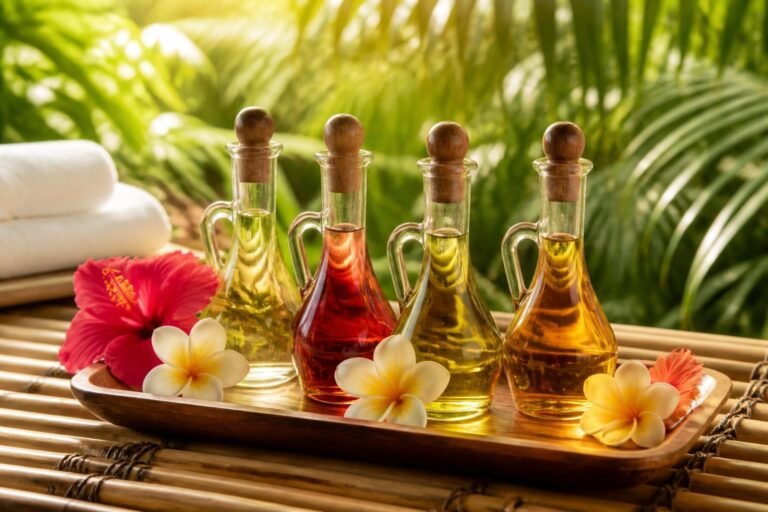
Living in a tropical climate comes with its own set of skin care challenges that demand more than just routine moisturizing. Despite the natural abundance of humidity, many find their skin feeling paradoxically dehydrated, oily, or congested. This intriguing contradiction stems from how tropical heat and humidity impact skin’s moisture balance and barrier function. With the right knowledge and products, particularly body oils tailored for tropical climates, you can unlock hydration secrets that keep your skin healthy, radiant, and comfortable year-round.
Here’s what you need to know to navigate the complex hydration needs of skin within tropical environments:
- Humidity often masks dehydrated skin beneath an oily surface. This issue surfaces because the skin struggles to retain moisture despite the wet atmosphere.
- Traditional heavy creams can exacerbate skin congestion and oiliness under tropical conditions. The ideal products are lightweight and fast-absorbing, leaving no sticky residue.
- Choosing body oils that mimic the skin’s natural oils and are non-comedogenic is key. Think of oils like jojoba, squalane, and fractionated coconut oil.
- Proper cleansing routines support oil absorption and prevent pore blockages. A gentle double cleanse with non-greasy oils removes sweat and pollutants without stripping hydration.
- Fragrance choice in tropical skin care matters for comfort and longevity. Natural, subtle scents hold up better under heat than heavy perfumes.
How Body Oils Transform Moisturizing in Tropical Climates
In tropical weather, skin undergoes continuous stress from high temperatures, elevated humidity levels, and solar exposure. While this environment fosters a superficial sheen, the deeper layers of skin experience increased transepidermal water loss (TEWL), a process where moisture escapes faster than it can be replaced. This phenomenon explains why many people in warm climates suffer from dry skin relief challenges despite the seemingly wet atmosphere.
Body oils designed specifically for tropical climates address this by providing hydration that complements the skin’s natural barrier rather than smothering it with heavy creams. For instance, oils such as jojoba and squalane closely mimic the molecular structure of human sebum, facilitating rapid absorption and maintaining skin balance.
Unlike traditional occlusive moisturizers, tropical-friendly body oils form a breathable protective layer that reduces moisture loss without clogging pores or leaving a greasy finish. This approach is particularly beneficial for those prone to oily or combination skin types who want lasting hydration without flare-ups or blockages. Additionally, these oils often incorporate antioxidants like vitamin E that protect the skin from free radical damage caused by UV rays and pollution.
Adopting a body oil as a core component of your skin care routine aligns with natural hydration secrets long cherished in tropical regions, where indigenous knowledge favored lightweight oils like kukui nut or moringa. These ingredients now enjoy renewed popularity for their efficacy in providing moisture and soothing irritated skin.
For a comprehensive tropical skin care experience, integrating body oils with other treatments, such as body wraps and detox spa treatments, helps maintain skin suppleness and encourage circulation, enhancing the overall health and glow of your skin.

Choosing the Ideal Body Oils: Ingredients and Absorption in Hot, Humid Conditions
A critical factor in selecting a body oil for tropical climates is its texture and absorption rate. Oils must be lightweight (‘dry oils’) to avoid trapping sweat and causing discomfort. The best tropical body oils typically feature carriers such as:
- Fractionated Coconut Oil: Retains hydration without the heavy, greasy feel of whole coconut oil.
- Jojoba Oil: Closely mirrors skin’s natural oils, preventing overproduction of sebum and supporting balance.
- Squalane Oil: A stable, non-irritating oil that absorbs quickly and helps restore barrier function.
- Kukui Nut Oil: Known for its rapid penetration and soothing properties.
Oils high in mineral oil, petrolatum, or thick butters like shea are generally avoided in hot climates because they tend to leave a suffocating layer that disrupts skin’s cooling through sweat evaporation.
Fragrance considerations are equally important. Heat accelerates oil oxidation, which can change scent profiles unpleasantly. Thus, tropical skin care enthusiasts often prefer oils infused with natural botanical extracts to ensure fresh, subtle aromas that don’t overpower.
For instance, a body oil scented with vanilla and sandalwood can evoke a serene beach atmosphere and offer relaxation benefits without feeling cloying in high humidity. Those seeking multi-functional products appreciate body oils that double as massage oils or after-sun treatments, amplifying their value in a tropical wellness routine.
| Body Oil Model | Category | Key Benefits | Ideal For |
|---|---|---|---|
| Shea Moisture Daily Hydration | Mid-Range | Fast absorbing, tropical scent, natural ingredients | Normal to dry skin struggling with hydration in humidity |
| Burt’s Bees Shea + Tropical Fruit | Mid-Range | Lightweight / non-greasy, fresh fruit scent, natural origin | Dry and mature skin, natural skincare fans |
| Saltair Body Oil Salt Water Vanilla | Premium | Luxury texture, rapid absorption, vegan & cruelty-free | Those seeking indulgence and sophisticated fragrance |
| O Boticário Lily Scented | Premium | Dry-touch, long-lasting hydration, vitamin E infusion | Dry skin needing deep hydration, floral scent lovers |
| Victoria’s Secret Pink Coco Oil | Budget | Affordable, pleasant coco fragrance, lightweight texture | Everyday hydration, fragrance simplicity seekers |
Mastering the Art of Oil Absorption and Layering in Tropical Skin Care
Knowing how to apply and layer body oils effectively can dramatically improve their moisturizing impact and comfort in a tropical climate. For best results, apply oils to damp skin immediately post-shower. This locks in moisture while preparing the skin for oil absorption and reduces the greasy sensation that heavy oils cause when applied to dry skin.
The technique of layering body oils beneath or alongside lighter lotions and sunscreens is also essential. Oils create a hydrating shield while lotions can offer targeted ingredients such as SPF, antioxidants, or cooling agents. Blending these products lets you protect your skin from environmental aggressors and maintain hydration without compromising breathability.
Double cleansing plays a significant role in preparing skin for oil absorption. Tropical environments expose skin to sweat, sunscreen, and environmental pollutants, which single cleansing might not effectively remove. Starting your evening routine with a cleansing balm or lightweight oil dissolves debris and paves the way for nourishing hydration steps.
Integrating regular spa treatments, such as tropical body scrub therapies, enhances skin receptivity by removing dead cells and encouraging circulation. This clears the way for body oils to penetrate deeply and perform at their best, revealing softer, more luminous skin.
Hydration Secrets: Combining Natural Oils and Advanced Skincare Techniques
Beyond individual products, the tropical skin care secret involves an ecosystem of complementary natural oils and routines. Many oils rich in antioxidants and vitamins create a synergy that targets common tropical skin problems such as sun damage, oily-dehydrated skin, and premature aging.
For example, kukui nut oil contains essential fatty acids that deeply nourish dry skin relief, while moringa oil boasts anti-inflammatory properties perfect for soothing irritated tropical skin. Combining these with antioxidants like vitamin E can neutralize pollution-induced free radicals, enhancing skin’s resilience and vitality.
Local spa techniques emphasize this harmony, favoring multi-step rituals that include deep cleansing, gentle exfoliation, and layers of hydration using natural oils and botanical extracts. These rituals not only deeply hydrate but also refresh the mind and body, adding emotional wellness to physical skin care.
Discover more wellness practices that align with tropical skin hydration by exploring wellness activities in Playa del Carmen. Incorporating spa experiences into your routine can amplify the benefits of topical hydration through improved circulation and relaxation.
Can I replace my moisturizer with body oil in tropical climates?
Yes, but only if you select a lightweight, fast-absorbing body oil. Applying oils to damp skin enhances absorption while avoiding the sticky or greasy layer that heavy creams produce.
Will body oils clog my pores in humid weather?
It depends on the oil’s comedogenic rating. Oils like jojoba and squalane are low on the scale and safe for tropical climates. Avoid heavy or mineral oil-based products to reduce congestion risks.
How should I store body oils in the tropical heat?
Store them in a cool, dark place away from direct sunlight. Heat accelerates oxidation, which can degrade the oil’s quality and scent.
Are natural oils better than synthetic for tropical skin care?
Natural oils with antioxidant properties, such as kukui and moringa, often provide superior nourishment and protection, especially when used in well-formulated blends designed for hot, humid climates.
What is the best way to integrate body oils into my tropical skincare routine?
Apply to freshly cleansed, damp skin after showering, and consider layering with lightweight lotions or sunscreens. Complement your routine with gentle exfoliation and occasional spa treatments for optimal results.